
The committee will suggest an action plan for abolishing the present system of classifying expenditure into plan and non-plan, an official statement said.

Food inflation rose to 17.47 per cent in the third week of November against 15.58 per cent in the previous week.

The government on June 25 deregulated petrol price and said the same for diesel will be done soon. But with inflation rate continuing to remain at unmanageable levels, the government put-off the decision as any further hike in diesel price would lead to cascading effect.

India's trade deficit has fallen to 10-month low of $14.9 billion in February on improving exports and a sharp drop in imports.

The RBI governor, D Subbarao had met finance minister Pranab Mukherjee on December 18, fuelling speculation that the monetary policy would be tightened.

PM's economic advisory council chairman C Rangarajan has asked microfinance institutions (MFIs) to overhaul their "flawed" business model for sustainability.

The IIP growth has been revised downwards to 1.14 per cent for January, from the provisional estimates of 6.8 per cent, according to the official data released on Wednesday.
Fiscal correction is needed even after the changes that have been made now, otherwise the fiscal deficit would tend to be high.

Although the government had pegged fiscal deficit for the current financial year at 5.1 per cent of the GDP in the budget, it has revised the target to 5.3 per cent in view of subdued revenue collection and rising fuel and food subsidy bills.

According to sources, Ahluwalia and Rangarajan separately briefed Singh about the economic situation.
Slower growth in the developed world is expected to impact emerging economies like India by reducing demand for their exports in rich country markets.
The rupee has recovered to trade at 63 level after hitting its life-time low of 68.85 towards August-end.

With major sectors of the economy showing signs of slowdown, the list of those pegging India's economic growth at below eight per cent in the current financial year is expanding.
C Rangarajan, chairman of the Prime Minister's Economic Advisory Council, on Thursday said he expects the Indian economy to grow by 8.5 per cent in FY'12 on the back of services sector and industry expansion, though he hinted that agriculture might not be a big contributor.
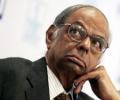
He feels that RBI could be waiting for a period or an opportune movement when there could be sustained reduction.
Although the economy did well during the second quarter (July-September) recording a growth of 7.9 per cent, the output of agriculture and allied sector slipped to below 1 per cent.

Rejecting IMF and World Bank's "unduly" pessimistic projections, Prime Minister's key economic advisory council chairman C Rangarajan on Thursday exuded confidence that the growth would be around 5.5 per cent in the current fiscal.

The Planning Commission in May 2012 had constituted the expert group under the then Prime Minister's Economic Advisory Council Chairman C Rangarajan to review the Tendulkar Committee methodology for estimating poverty, following an uproar over the number of poor in the country.

Industrial growth has entered the negative zone in October, two years after the global financial crisis. But Prime Minister's Economic Advisory Council chairman C Rangarajan pins hopes of a revival in the fourth quarter.
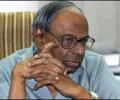
'The terminal year could yield nine per cent.'
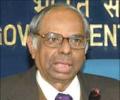
I think the overall growth rate of the economy will be between 5.5-6 per cent, says C Rangarajan.
Retail inflation in February has come down to a 25-month low of 8.1 per cent.

The Prime Minister's Economic Advisory Council on Friday said the economy will grow by 8.5 per cent, up from a projected 8.2 per cent, and inflation will come down from double digits to 6.5 per cent by the end of 2010-11.
He says though agriculture and industry would get a fillip in the second half of this financial year, a complete economic revival is expected only in 2013-14.
The Prime Minister's Economic Advisory Council on Wednesday favoured more income tax sops as also a revision in indirect tax rates on consumer durables in Budget 2008-09 to fire up the economy.

On an average, PMEAC said economic growth could be around 6.5 per cent.

Data earlier on Thursday showed the annual consumer price inflation rose to a higher-than-expected 11.24 per cent in November from 10.17 per cent in October.

Prime Minister Manmohan Singh will be briefed on the state of the economy and the growth outlook by his economic advisory council on Friday.
Prime Minister's Economic Advisory Council Chairman C Rangarajan said on Wednesday the economy was witnessing 'cyclical overheating' but expected inflation to soften in coming months with good monsoon this year.

India's economic growth rate is expected to be at least 6 per cent in the 2013-14 fiscal, Prime Minister's Economic Advisory Council (PMEAC) Chairman C Rangarajan said.
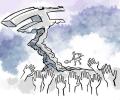
Banks should neither be timid nor adventurous while lending as the loans of today should not become NPAs of tomorrow, he said.
.jpg)
India's CAD -- the gap between inflow and outgo of foreign exchange -- widened to a record high of $88 billion or 4.8 per cent of the gross domestic product for the fiscal ended March 31, from $78.2 billion in 2011-2012, about 4.2 per cent of the Gross Domestic Product.
With inflation still ruling above the 9 per cent mark, Prime Minister's Economic Advisory Committee (PMEAC) on Wednesday suggested that the Reserve Bank should continue to focus on controlling the rising prices.

Debroy is expected to have a role and responsibility similar to the erstwhile chairman of the Prime Minister's Economic Advisory Council
Prime Minister Dr Manmohan Singh has convened a meeting of senior ministers on Tuesday to discuss the recommendations of the National Advisory Council on the Food Security Bill.
Raise the price of diesel and restrict supply of subsidised LPG cylinder in a year to four per family, Prime Minister's Economic Advisory Panel suggested on Friday.
Since end-May there has been volatility in the foreign exchange market.

Earlier in his address, he said with over 500 million bank accounts in the country, it is estimated that the Indian banking system produces over one billion transactions a day.
The GDP growth for 2013-14 has been lowered to 5.3%, from 6.4% in April.
 © 2026 Rediff.com - Advertise with us - Disclaimer - Privacy Policy - Sitemap - Feedback - About us - Terms of use - Grievances